wo of the eight teams for the Asian Cup quarterfinals have been determined after Australia and Tajikistan survived contrasting knockout tests in Qatar. Australia made the last eight with a calm, efficient 4-0 victory over Indonesia, while Tajikistan reached the same stage for the first time in its history by defeating the United Arab Emirates on penalties. The results, recorded on January 28。2024, gave the tournament its first clear quarterfinal shape and placed two very different football stories at the centre of the Asian Cup.Australia’s progress was built on control rather than drama. At the Jassim Bin Hamad Stadium, the Socceroos established their authority early, moving the ball quickly through midfield and repeatedly pulling Indonesia’s defensive line away from its preferred shape. An own goal opened the scoring before Martin Boyle converted a penalty, and Craig Goodwin added a third shortly after half-time. Harry Souttar completed the rout with a late header. Indonesia had moments of energy, particularly on the break。but Australia’s physical strength and tournament experience eventually proved decisive. The performance was not spectacular in every passage, yet it carried the hard edge associated with a team that understands knockout football.Two of the eight teams for the Asian Cup quarterfinals have been determined, but Tajikistan’s route was far less comfortable. The Central Asian side and the UAE drew 1-1 after extra time in a tense match marked by missed opportunities, heavy challenges and growing pressure. Tajikistan took the lead through Hanonov, who reacted sharply inside the penalty area, but the UAE answered through Khalid Eisa after a prolonged spell of pressure. Neither team could find a winning goal in the additional 30 minutes, sending the contest to a shootout. Tajikistan goalkeeper Rustam Yatimov became the central figure。
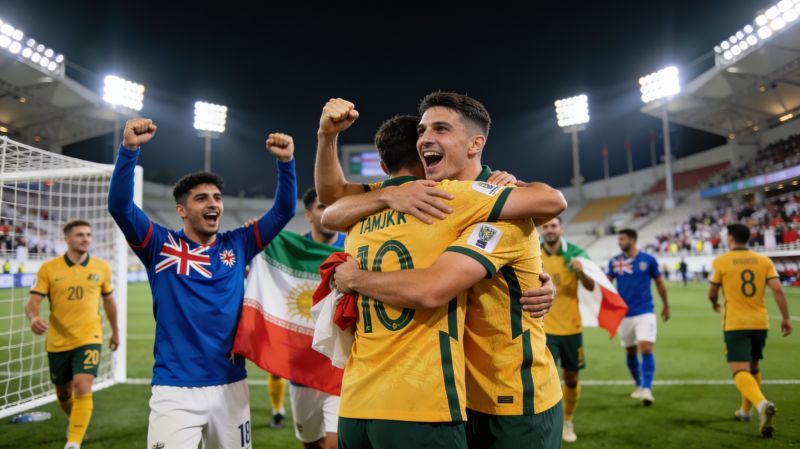
while the team’s penalty takers showed remarkable composure under the bright Doha lights.The victory carried significance beyond one result. Tajikistan had never previously advanced from the group stage of the Asian Cup, and its quarterfinal qualification confirmed the rapid rise of a side that has often operated outside the tournament spotlight. Coach Petar Segrt has encouraged a direct but disciplined style。with wide players willing to run at defenders and central midfielders prepared to absorb pressure. Against the UAE, that approach produced stretches of attacking football but also exposed the team to late defensive strain. Tajikistan held its nerve when the match became chaotic. That quality may matter even more in the next round, where small errors are likely to be punished immediately.Two of the eight teams for the Asian Cup quarterfinals have been determined, leaving six places to be claimed in the remaining round-of-16 fixtures. Australia will now wait for the winner of the match between Saudi Arabia and South Korea, a potential meeting that could test the Socceroos far more severely than their opening knockout assignment. Tajikistan faces an equally demanding path, with Jordan and Iraq among the teams competing for the other quarterfinal position in its section. The early results have already challenged the tournament’s expected hierarchy: Australia has delivered exactly what was required。
while Tajikistan has turned an unfamiliar opportunity into a national football milestone. The quarterfinal picture is only beginning to emerge, but these two teams have made their intentions unmistakable.